Resource page · Florida real estate

2026 Federal Holidays That Affect Real Estate Contract Deadlines

The short answer: holidays matter whenever a transaction uses business-day counting or depends on banks, title companies, county recording offices, lenders, inspectors, or association managers who may be closed. In 2026, the biggest watch-out is Independence Day, which falls on Saturday but is operationally observed on Friday, July 3.

11Observed federal holidays to account for in 2026.
Jul 3The observed Independence Day closure that is easiest to miss.
3 clustersLate June/early July, Thanksgiving week, and year-end deserve extra caution.
Created planning visual
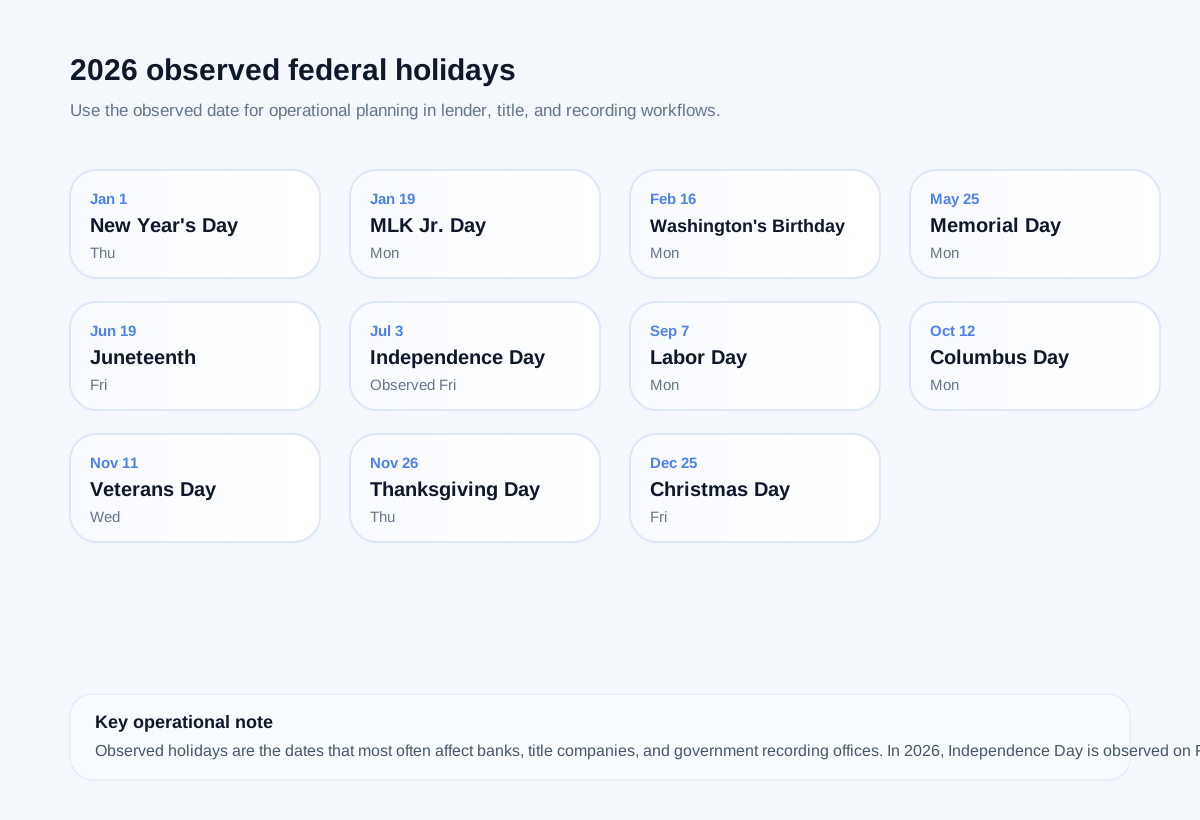
2026 observed federal holidays quick-reference calendar for real estate deadline planning
A fast reference for agents, transaction coordinators, assistants, and team admins who need to see the full 2026 holiday picture at a glance.
Observed closuresOperational closures matter more than the holiday name itself.
Business-day riskHoliday weeks compress the time available to solve real transaction tasks.
Florida workflowLender, title, recording, HOA, and inspection timing can all tighten around holidays.
Key Takeaways
1
Federal holidays do not automatically move every deadline.
Whether timing changes depends on the contract language, the counting method, and the service providers involved.
2
Observed dates are what matter operationally.
If a holiday falls on a weekend, the weekday closure is often what affects lenders, title companies, and recording offices.
3
Holiday weeks shrink workable time.
Even when the contractual deadline does not move, vendor availability and response time can get tighter.
4
Manual systems fail quietly around edge cases.
That is especially true when one holiday overlaps several active files.

What “observed holiday” means

An observed holiday is the weekday on which most federal offices, banks, and many operational partners close when a holiday falls on a weekend. For example, Independence Day falls on Saturday, July 4, 2026, but the most important closure for transaction planning is Friday, July 3.

That distinction matters because real estate professionals do not manage the statutory holiday in the abstract. They manage the day lenders will not fund, title teams may not process, and county recording offices may not record.

2026 holiday list

Observed federal holidays in 2026

This is the calendar reference most useful for real estate operations. The dates below follow the official 2026 federal holiday schedule, including the Friday, July 3 observance for Independence Day.

Use the observed date for operational planning

Banks, lenders, title companies, and recording offices tend to follow the observed closure, not just the statutory holiday date.

HolidayObserved dateWhy it matters operationally
New Year’s DayThursday, January 1Banking + title + recording
Birthday of Martin Luther King, Jr.Monday, January 19Business-day windows lose a Monday
Washington’s BirthdayMonday, February 16Lender and title timelines tighten
Memorial DayMonday, May 25Three-day weekend pressure
Juneteenth National Independence DayFriday, June 19End-of-week closure
Independence DayFriday, July 3 (observed)Most easily overlooked observed closure
Labor DayMonday, September 7Business-week compression
Columbus DayMonday, October 12Bank closure, check local practice
Veterans DayWednesday, November 11Mid-week interruption
Thanksgiving DayThursday, November 26Often functions like a four-day slowdown
Christmas DayFriday, December 25Year-end funding and recording pressure
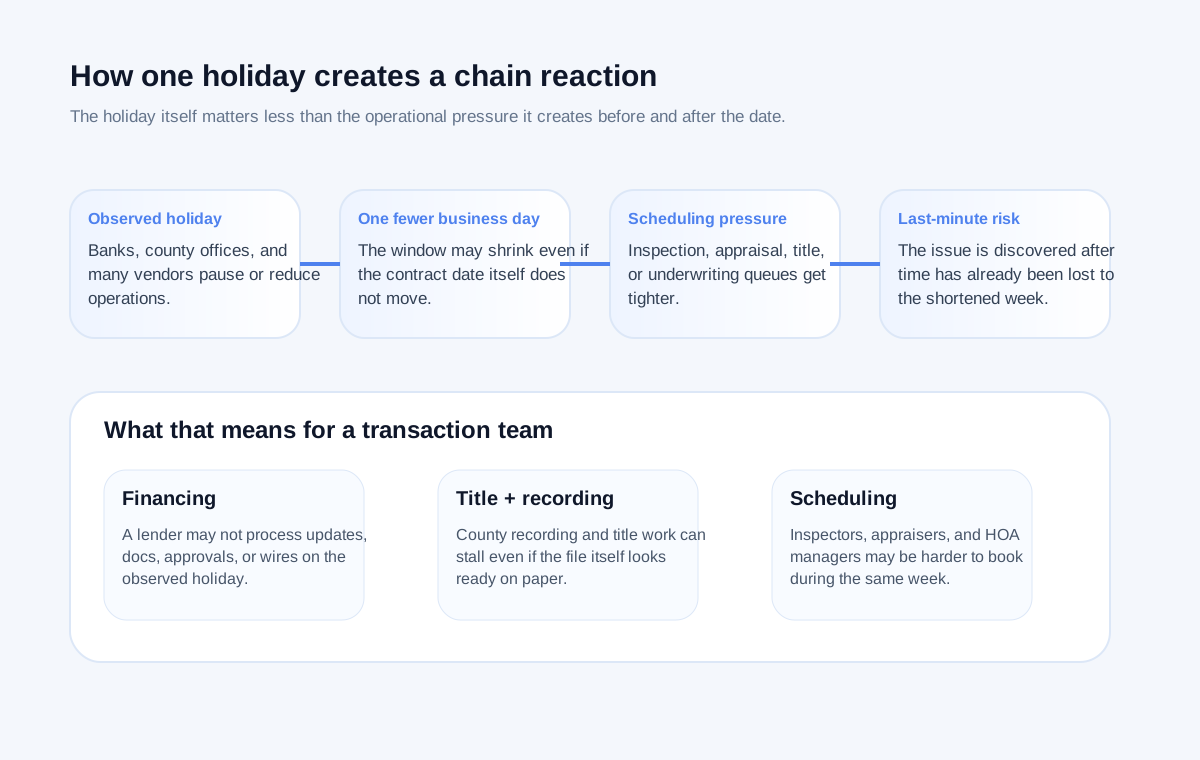
Diagram showing how one observed holiday creates lender, title, recording, and scheduling pressure in a real estate transaction
The holiday itself is only the start. The real issue is the chain reaction it creates across transaction participants.
Why holidays matter in deadline-driven transactions

Where the pressure actually shows up

Real estate deals rarely fail because someone forgot the holiday existed. They fail because the transaction team underestimates how much operational work must happen before or after it.

1
Lender timing
Underwriting, funding, disclosures, and wire processing are all vulnerable to holiday slowdowns.
2
Title and recording
Title work and county recording depend on office availability, not just on the contract date itself.
3
Scheduling windows
Holiday weeks tighten access to inspectors, appraisers, HOA managers, and decision-makers.

The safest interpretation is simple: if a deadline depends on a business day, on outside vendors, or on same-day coordination, holiday awareness should be built into the workflow from the beginning.
High-risk periods

The 2026 clusters that deserve extra attention

Not every holiday creates the same amount of disruption. The highest-risk windows are the ones where weekends and observed holidays stack up, or where a mid-week closure compresses a tight deadline window.

Higher risk

Late June to early July

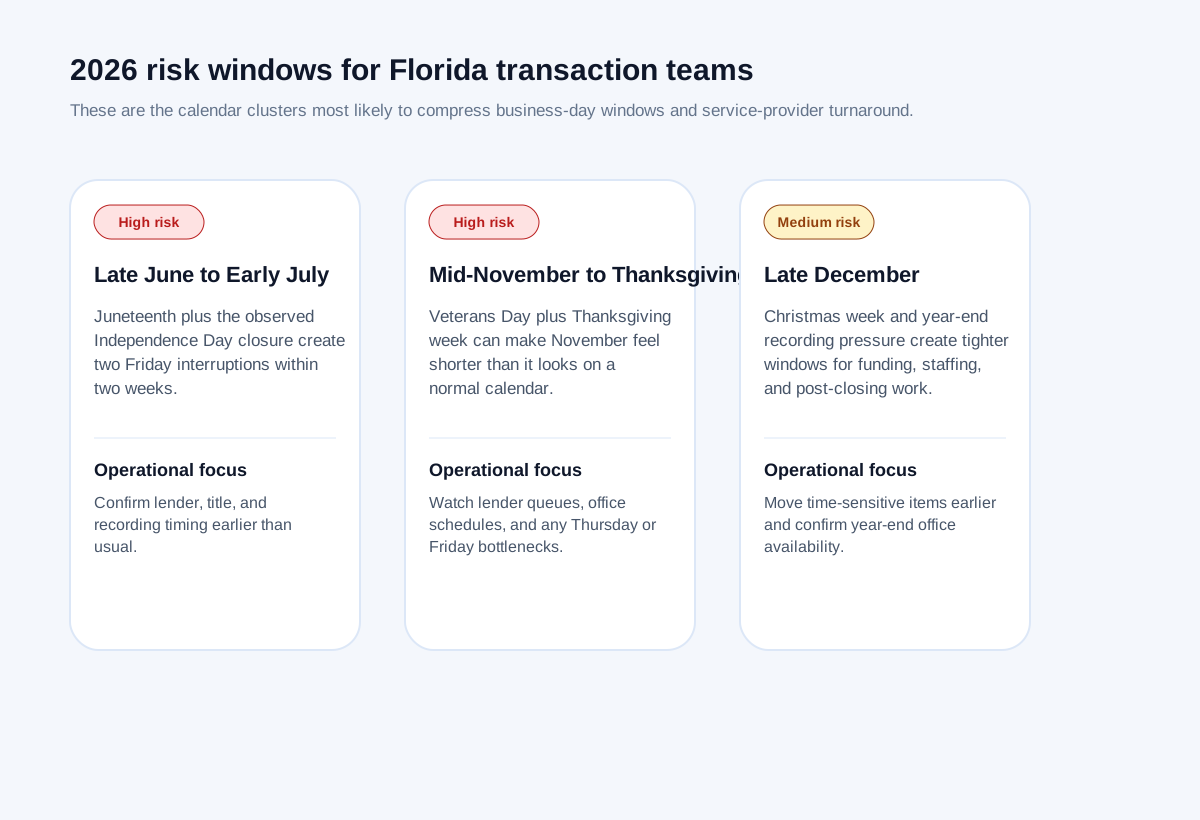
Juneteenth on Friday, June 19 and the observed Independence Day closure on Friday, July 3 create two Friday disruptions within two weeks. That can quietly shrink lender and title timing during a busy summer stretch.

Higher risk

Thanksgiving week

Thanksgiving falls on Thursday, November 26. Even when Friday is not a federal holiday, many offices run at reduced capacity or close entirely. That makes the week feel shorter than it looks on paper.

Elevated risk

Year-end closings

Christmas on Friday, December 25 creates a three-day closure. The operational issue is not just one day off. It is reduced staffing, tight funding windows, and year-end recording pressure.

Common mistakes

Where agents and coordinators usually get caught

Counting business days like calendar days
One missed holiday can make a deadline appear one to three calendar days earlier than it actually is.
Looking only at the statutory holiday date
In 2026, July 3 matters more operationally than July 4.
Assuming every service provider follows the same schedule
Banks, county offices, appraisers, and association managers can each behave differently around the same holiday.
Discovering the issue too late
The earlier a holiday conflict is spotted, the easier it is to adjust expectations, scheduling, and communication.
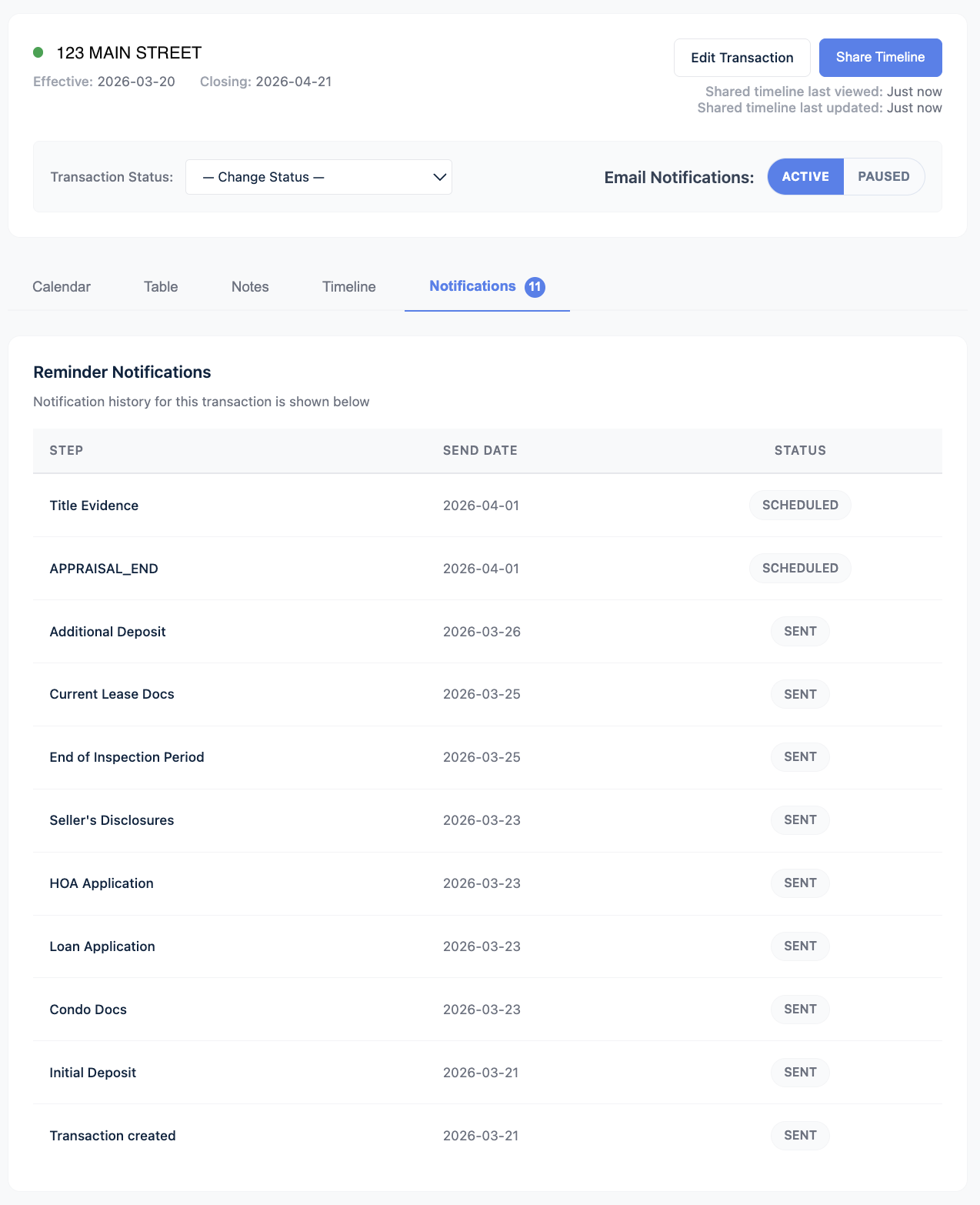
Upcoming reminders and due steps inside Deadline Monitor
This is where software becomes practical. Holiday awareness matters most when the reminder system is attached to the transaction, not to a disconnected spreadsheet cell.
Visual overview of the 2026 risk windows that most often compress business-day deadlines for Florida real estate transactions
A practical way to think about the year: identify the weeks where a normal workflow is most likely to break down.
How to avoid deadline calculation errors

Build the holiday check into the process, not into memory

The cleanest method is to do the holiday review at the moment a transaction is created. Identify each deadline that depends on business-day counting, then overlay the 2026 calendar and the availability of the vendors or offices that matter to that deadline.

That is manageable when you are working one file. It becomes unreliable when you are working ten, fifteen, or twenty at once. That is why manual tracking tends to fail around holidays even when the people involved are experienced and careful.

DM
Where Deadline Monitor fits

Deadline Monitor gives the transaction a structured timeline, business-day-aware reminders, and a client-facing progress view. The value is not just the reminder itself. It is the fact that the reminder stays attached to the deal context.

FAQ

Common questions about 2026 federal holidays and real estate deadlines

Do federal holidays automatically move every real estate contract deadline?

No. Whether a holiday changes a deadline depends on the contract language, the counting method for that particular obligation, and the operational reality of the people handling the transaction.

What does “observed holiday” mean in 2026?

It means the weekday on which offices and banks are actually closed when the legal holiday falls on a weekend. In 2026, Independence Day is the clearest example because the operational closure is Friday, July 3.

Which 2026 holiday is easiest to overlook?

The observed Independence Day closure on Friday, July 3. Teams often think about July 4 but forget that the business-day disruption happens the day before.

Which transaction stages are most vulnerable during holiday weeks?

Financing, title work, county recording, inspection scheduling, appraisal scheduling, HOA or condo document delivery, and wire timing are all common pressure points.

Is this page legal advice?

No. It is a planning guide. The contract language controls, and legal or broker guidance may be needed for contract-specific questions.

Why does manual tracking break down around holidays?

Because the risk is cumulative. One holiday across one file is manageable. One holiday across multiple files, vendors, and deadlines is where spreadsheets and memory become unreliable.

Conclusion

Holidays are predictable. Deadline mistakes do not have to be.

Every observed federal holiday in 2026 is known today. The real advantage comes from building that knowledge into the transaction workflow before the week gets busy. If your team wants one place to track dates, business-day reminders, and transaction progress, start with one file inside Deadline Monitor.